

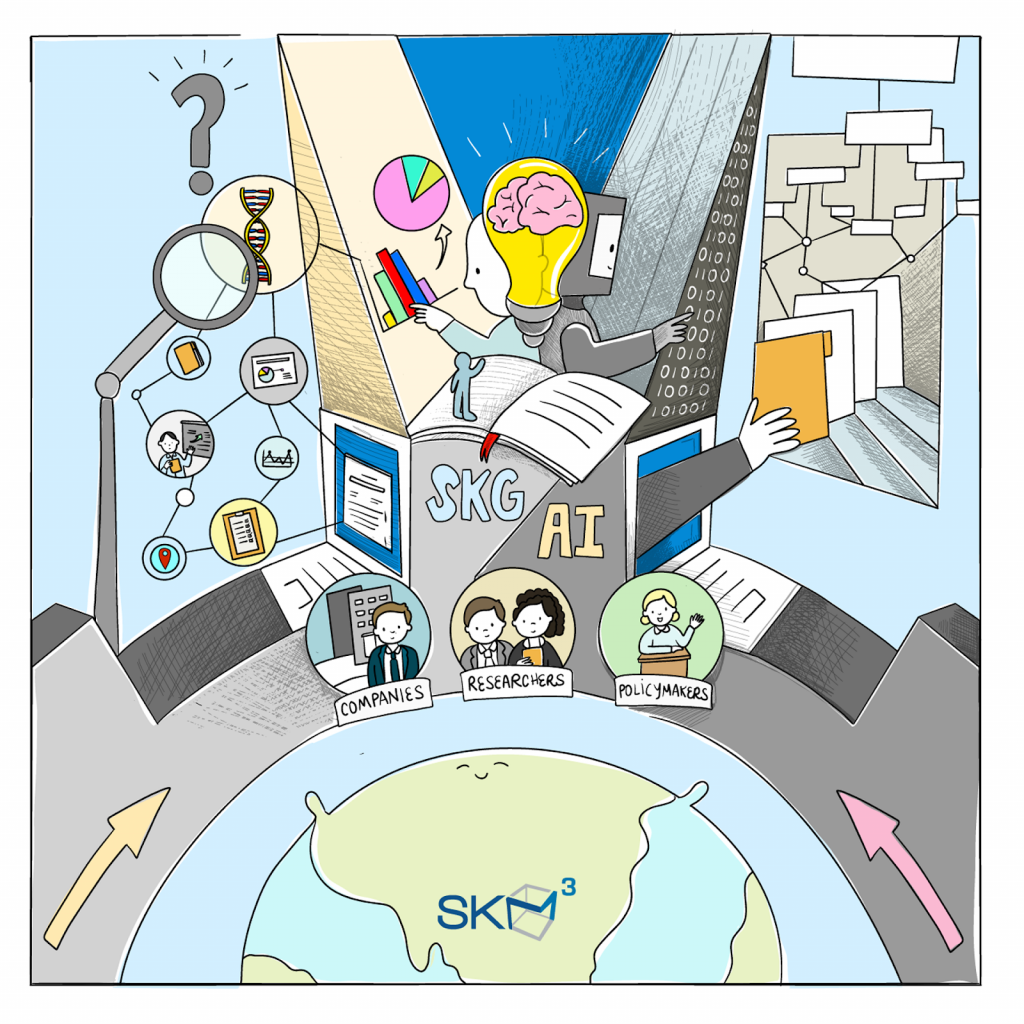
This article is part of a special series celebrating KMi’s 30 years. Over the past three decades, KMi has been at the forefront of pioneering research and innovation in knowledge technologies, shaping the way information is created, shared, and understood. In this series, we revisit some of the most impactful projects that have influenced academia, industry, and society, highlighting their significance and legacy.
Artificial Intelligence is no longer just a buzzword in tech, it’s reshaping the way science itself is done. From predicting research trends to helping write literature reviews, AI is becoming an essential tool for researchers worldwide. In KMi, the Scholarly Knowledge Mining (SKM) team has been leading this transformation for over a decade.
Founded in 2011, the SKM team has pioneered innovations that make sense of the vast and ever-growing body of scientific knowledge. One of their early breakthroughs was Rexplore, a platform that used AI to map research trends and predict emerging topics. This technology didn’t just help academics, it influenced tools now used globally, such as Semantic Scholar.
Partnerships have been key to this success. Since 2014, KMi has worked closely with Springer Nature, the world’s largest academic publisher, to improve editorial workflows and discoverability. Their AI-powered Smart Topic Miner has cut editorial time and costs while boosting content visibility. Another tool, the CSO Classifier, has been adopted by organisations worldwide, including Stanford University, which used it to analyse two million AI papers for its 2025 AI Index Report.
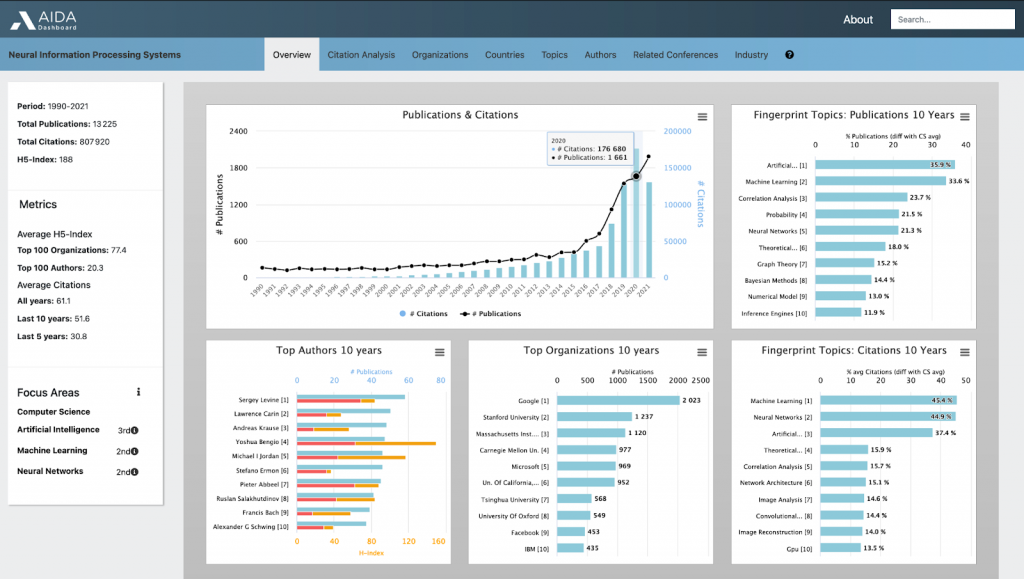
More recently, the team has focused on knowledge graphs, structured networks that reveal hidden connections in research. Their AIDA Dashboard gives Springer Nature editors data-driven insights into journals and conferences, and even answers complex questions using conversational AI.
Looking ahead, the SKM team is tackling one of science’s biggest challenges: creating AI systems that can produce deep, insightful literature reviews, not just summaries. With advances in large language models and neurosymbolic AI, the future of research could look very different, and KMi is helping to shape it.
Related links:
- Resilience Enterprise (project website)