KMi’s Senior Research Fellow Dr Alexander Mikroyannidis presented his latest research at the 20th International Technology, Education and Development Conference (INTED 2026), held on 2-4 March 2026 in Valencia, Spain. He presented the paper “Learning with Responsible AI: Perceptions and Experiences of Learners in Online Professional Education” co-authored with Joseph Kwarteng, Aisling Third, John Domingue, and David Tarrant. This paper investigates how learners engage with an AI chatbot implemented using the SAGE-RAI (Smart Assessment and Guided Education with Responsible AI) framework in a professional online course. This work offers practical guidance for designing AI-enhanced tools for education that are transparent, curriculum-aligned and supportive of ethical practice, underscoring the importance of governance frameworks and professional development in responsible AI integration.
Additionally, Alexander presented the paper “Mind-Size Bites, Macro Impact: A Research-Based Framework for Experiential Learning in Online Microlearning Targeting Mental Health Counsellors” co-authored with Stefanos Armakolas. This paper explores how online microlearning can be designed to support experiential education and enhance learner engagement in professional practice programmes. The study, which involved 112 postgraduate students, found that features such as personalisation, interactivity and modular microlearning activities were strongly associated with increased motivation, comprehension and self-regulated learning. Based on these results, the authors propose a research-based framework for inclusive and interactive microlearning that instructors can adopt when designing short-form digital learning experiences.
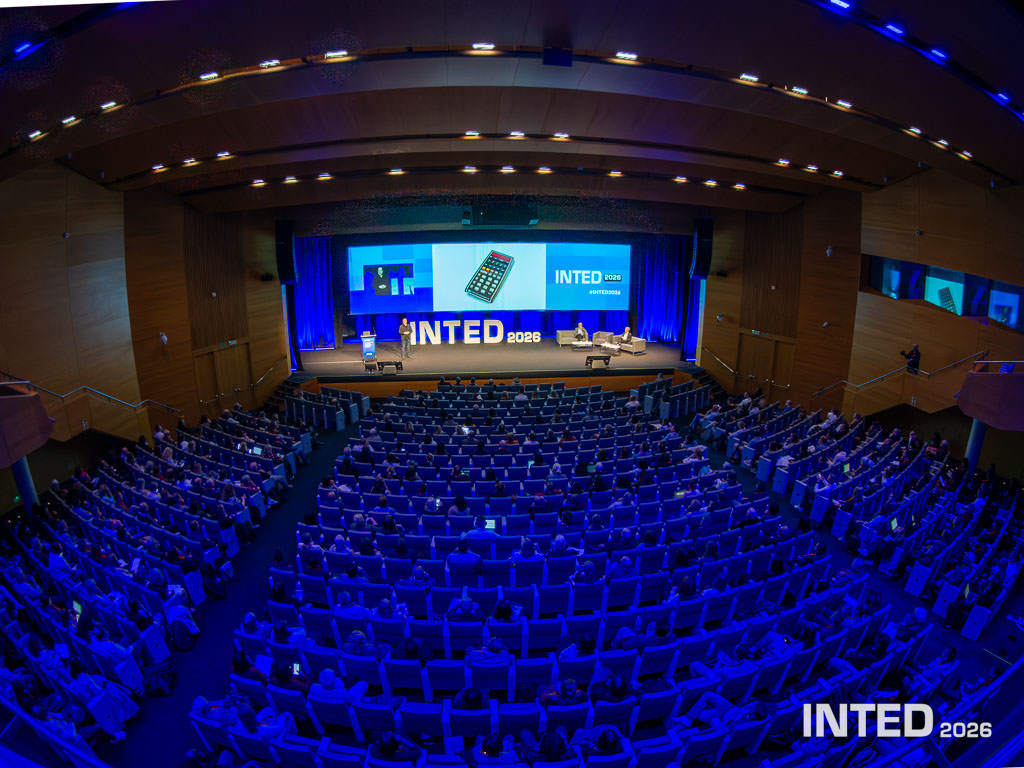
INTED is one of Europe’s largest annual gatherings of educators, researchers and technology specialists. The 2026 edition marked the 20th anniversary of INTED and brought together more than 700 delegates from around the world to discuss innovations in teaching, learning and educational technology. The event featured a rich programme of oral and poster sessions, interactive workshops, keynote talks and networking opportunities.
The full papers are available through ORO:
Mikroyannidis, Alexander; Kwarteng, Joseph; Third, Aisling; Domingue, John and Tarrant, David (2026). Learning with Responsible AI: Perceptions and Experiences of Learners in Online Professional Education. In: 20th International Technology, Education and Development Conference (INTED 2026), 2-4 Mar 2026, Valencia, Spain.
Mikroyannidis, Alexander and Armakolas, Stefanos (2026). Mind-Size Bites, Macro Impact: A Research-Based Framework for Experiential Learning in Online Microlearning Targeting Mental Health Counsellors. In: 20th International Technology, Education and Development Conference (INTED 2026), 2-4 Mar 2026, Valencia, Spain.