Event

Growing up online: Young voices, digital futures

Growing Up Online: Young Voices, Digital Futures

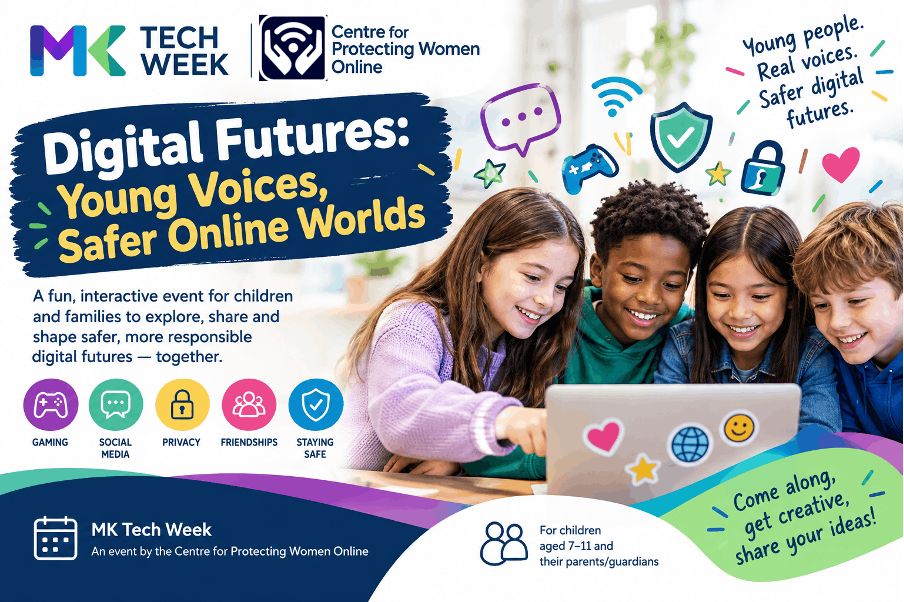
Last Friday, KMi hosted an event at The Open University as part of Milton Keynes Tech Week 2026, bringing together children aged 7 to 11 and their parents to talk about online safety. 

Run by experts from the Centre for Protecting Women Online (CPWO) and the KMi, the session opened with a warm welcome from the CPWO director, followed by activities for kids and parents to reflect on mobile device use and how it makes them feel, and an open conversation about games, apps, and tips for staying safe online. 

It was wonderful to hear the children’s own views on what it means to be safe and kind online, from the strategies they use when something doesn’t feel right to the ways they include friends and support them if they’re being bullied. They even shared with the team the names of their favourite games and apps, some of which we haven’t heard of before. 

The event was a great success with about 50 attendees who commented on how they learned about the younger generations’ fresh perspectives of online safety!
Rethinking AI in Higher Education through Metaheutagogy

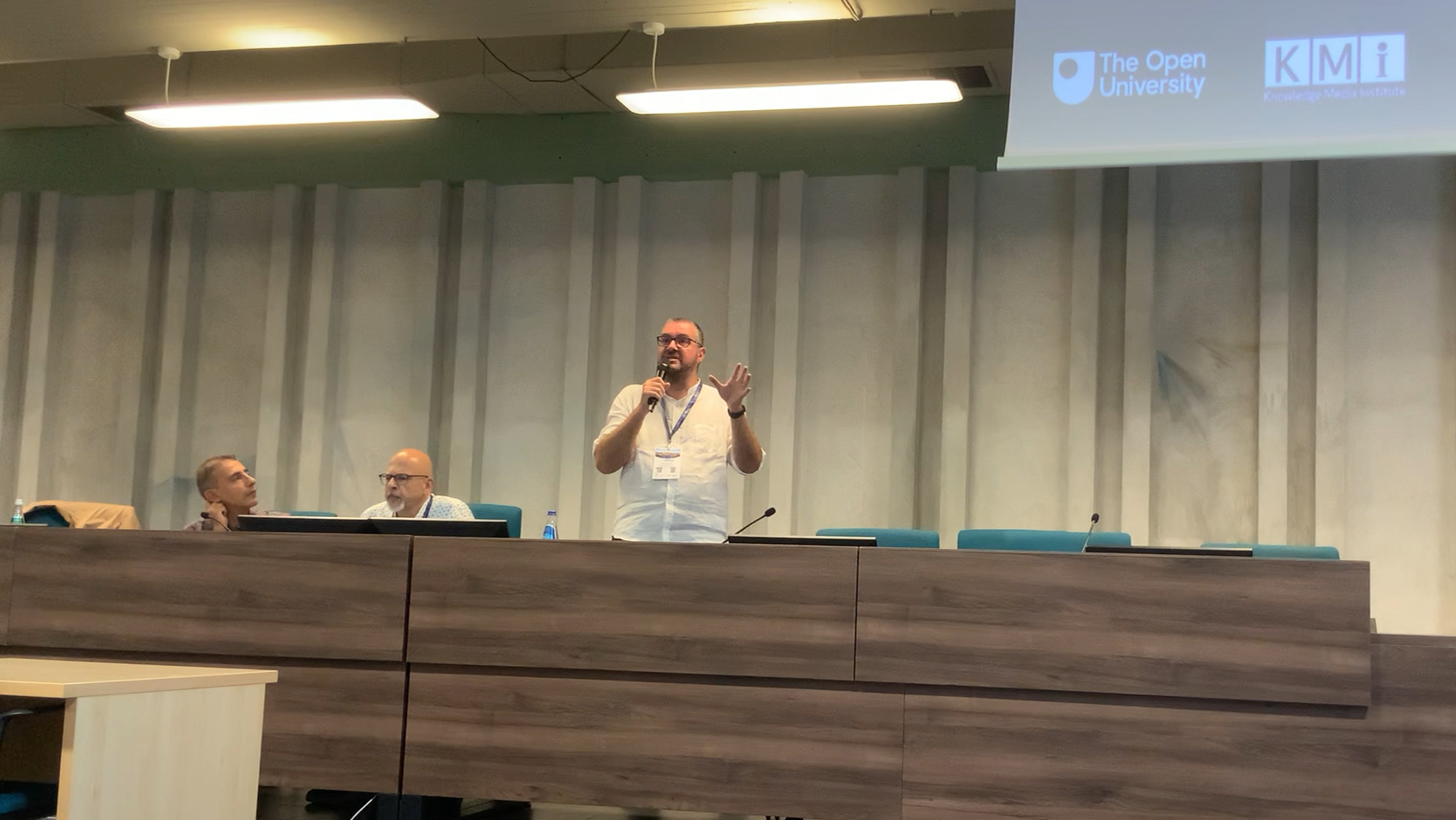
Dr Alexander Mikroyannidis presenting his latest work on AI-enhanced learning at the 8th International Conference on Higher Education Learning Methodologies and Technologies Online (HELMeTO 2026)

KMi’s Senior Research Fellow Dr Alexander Mikroyannidis presented his latest work on AI-enhanced learning at the 8th International Conference on Higher Education Learning Methodologies and Technologies Online (HELMeTO 2026), held in Cagliari, Italy, from 28-30 September 2026. The conference brought together academics, researchers and practitioners from around the world to discuss advances in digital learning methodologies and technologies in higher education.

Dr Mikroyannidis presented the metaheutagogy framework, a novel approach that explores how AI can support learners in developing critical thinking and metacognitive skills. Developed by Alexander Mikroyannidis and John Domingue, the metaheutagogy framework addresses one of the central challenges of AI-enhanced learning: ensuring that learners retain agency, judgement and responsibility while benefiting from increasingly capable AI systems. The framework builds upon established learning theories, extending the progression from pedagogy, andragogy and heutagogy to a new paradigm in which AI acts as a reflective and dialogic learning partner. 

Commenting on the event, Dr Mikroyannidis noted that AI is transforming the way people learn and create new knowledge. He emphasised that we must move beyond teaching learners how to use AI and instead help them develop the metacognitive capabilities needed to critically evaluate and direct intelligent systems. As higher education institutions continue to explore the opportunities and challenges presented by AI, metaheutagogy offers a timely framework for designing learning experiences that place human judgement, reflection and lifelong learning at the centre of the learning process.